

Quick answer: Treat a Raleigh-to-Charlotte move as a coordinated origin-and-delivery project, not a same-neighborhood move. Confirm the written scope, both access plans, the delivery window, valuation selection, payment terms, and the handoff of keys before loading begins.
This guide answers How should I plan a move from Raleigh to Charlotte? for households in Raleigh and the greater Triangle. It is an educational planning resource, not a binding estimate, legal opinion, insurance interpretation, safety certification, or guarantee. Current contracts, property rules, manufacturer instructions, and government guidance control when they apply.
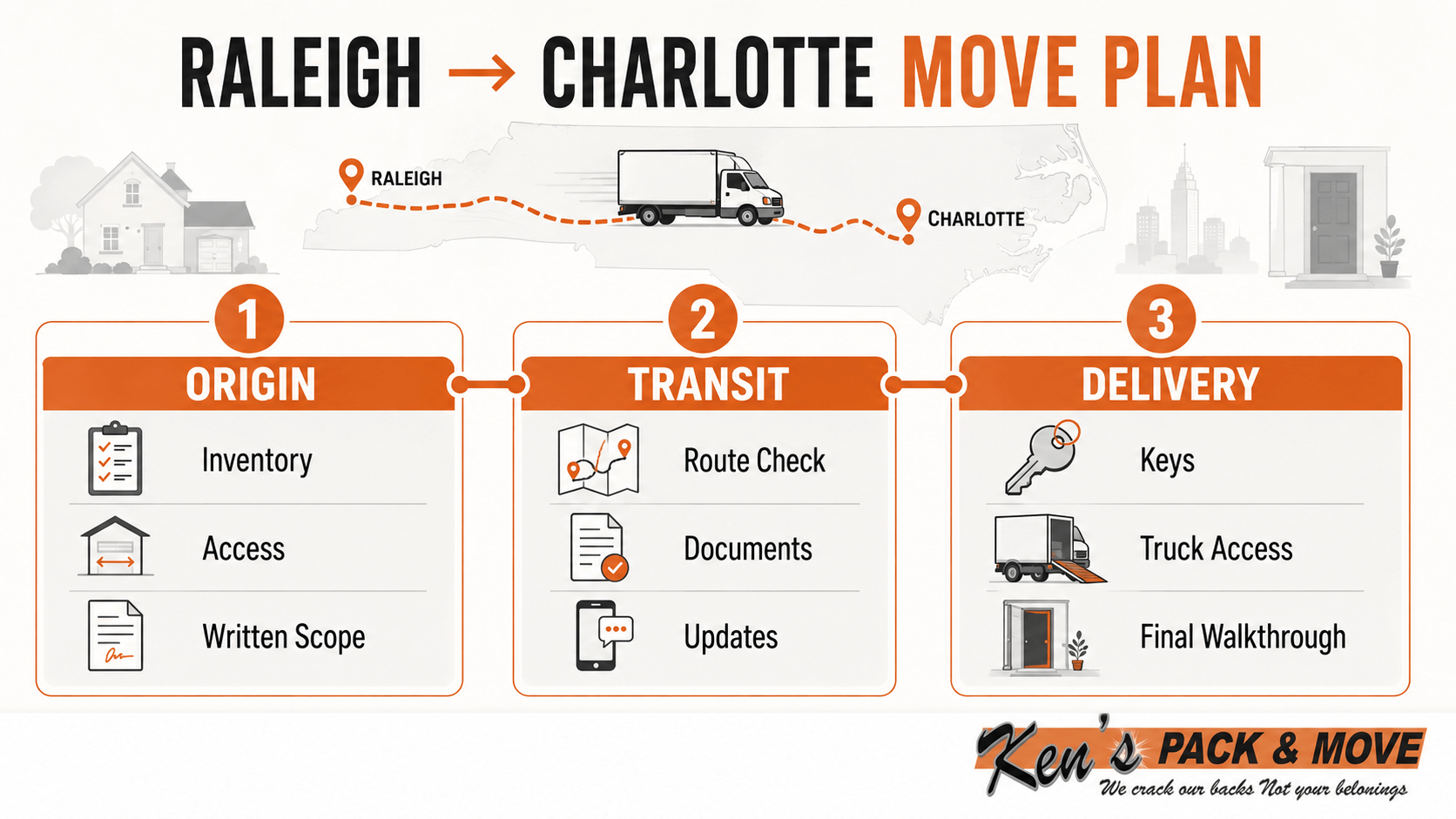
How should I plan a move from Raleigh to Charlotte?
Treat a Raleigh-to-Charlotte move as a coordinated origin-and-delivery project, not a same-neighborhood move. Confirm the written scope, both access plans, the delivery window, valuation selection, payment terms, and the handoff of keys before loading begins. The practical standard is simple: convert each assumption into a named owner, deadline, and form of confirmation. That creates a plan the customer, mover, property contact, and other professionals can execute.
Define the move before comparing estimates
Create a written inventory by room, identify owner-packed and mover-packed cartons, and list oversized or delicate items. Include both addresses, preferred dates, extra stops, storage needs, and anything requiring disassembly. The purpose is to let each mover price the same job instead of comparing different assumptions.
Charlotte delivery conditions may differ from the Raleigh origin. Record stairs, elevators, loading docks, gate procedures, parking distance, street restrictions, and building hours at both ends. Send photos or a video walkthrough when requested, but keep the agreed inventory in writing.
Understand what can change the final charge
For a move within North Carolina, the distance, shipment size or weight, labor, packing, access, and added services can affect the charge under the mover’s applicable tariff and written documents. Ask which pricing method applies to this move and what events can change the estimate.
Do not publish or rely on a universal Raleigh-to-Charlotte price. Two homes on the same route can require different crews, equipment, packing time, access work, or scheduling. A useful budget separates transportation and labor from packing, valuation, storage, specialty handling, and possible access charges.
Build separate origin and destination plans
At the Raleigh home, reserve legal truck access, complete agreed packing, isolate personal-carry items, and assign one person to answer crew questions. At the Charlotte home, confirm possession, keys, utilities, parking, elevator reservations, and the person authorized to receive the shipment.
Use a destination room plan so cartons and furniture are placed correctly the first time. Mark rooms consistently on boxes and door signs. If closing or lease access is uncertain, decide before move day where the shipment can legally go and who will approve a change.
Plan the travel-day handoff
Keep identification, medications, keys, contracts, chargers, water, and irreplaceable small valuables with you. Do not pack documents needed to enter the destination. Share a reliable phone number and a backup contact with the mover.
Traffic incidents, weather, construction, and property access can affect arrival. The signed agreement—not an assumed drive time—should explain the planned delivery arrangement. Ask when and how updates will be provided if the schedule changes.
Protect belongings and document condition
Photograph valuable or fragile items, retain serial numbers and receipts when practical, and note pre-existing damage during the walkthrough. Review the valuation selection and any high-value-item requirements before signing. Valuation is not automatically the same as a separate insurance policy.
At delivery, direct placement, check rooms and large items, and note visible exceptions through the mover’s process. Keep packaging and damaged property until the mover explains the claim procedure; do not make assumptions based only on a blog or verbal statement.
Coordinate utilities, records, and address changes
Schedule utility starts and stops around actual possession, not simply the preferred moving date. Update important senders directly and use the official USPS address-change channel. Confirm insurance coverage dates for both properties with the applicable providers.
Keep closing or lease documents, school and medical records, pet records, and vehicle information accessible. A route move is smoother when administrative tasks have named owners and confirmation numbers rather than living on an informal mental list.
Use a final 72-hour verification
Reconfirm the inventory, addresses, crew arrival window, payment method, parking, building contacts, and destination access. Report added items or service changes before the truck arrives. Finish packing to the level stated in the estimate.
The day before, charge phones, label rooms, clear walkways, separate prohibited items, and confirm who holds every key. On moving day, complete an origin walkthrough before departure and a destination walkthrough before the crew leaves.
Build a Charlotte arrival plan that works without guesswork
Create a destination sheet that can be used by someone who did not attend the estimate. It should show the approved truck location, entrance, floor or unit, gate and elevator instructions, key holder, backup receiver, room labels, and the destination contact who controls the property. Add the earliest authorized arrival and the time by which the truck must leave any reserved area.
Walk the intended path before moving day if possible. Check turns, ceiling height, stairs, door swing, flooring, and the proposed location of large furniture. If the destination is new construction or a managed building, verify whether another delivery or trade crew will compete for the same access. Send meaningful changes to the mover rather than leaving them for the driver to discover.
Use a route-move document pack
Keep the estimate, bill of lading, valuation choice, inventory, payment instructions, access confirmations, parking information, and contact sheet together in paper or securely available digital form. The customer decision-maker should know which document controls each issue and where a change must be recorded.
At the end of the move, add the final paperwork, receipts, delivery notes, and photographs to the same pack. This makes later questions easier to answer and supports a clean record if an item, property surface, timing issue, or charge needs to be reviewed.
Build a verification record for moving from Raleigh to Charlotte NC
A strong plan should be usable by a backup decision-maker. Create a one-page control record headed “How should I plan a move from Raleigh to Charlotte?” and list the current move date, origin, destination, inventory version, requested services, and the people authorized to approve changes. Add the local and topical entities that affect the work—Raleigh; Charlotte; I-40; I-85; Wake County; Mecklenburg County—only when they are genuinely relevant to the address or service. This keeps local optimization connected to real logistics instead of repeating place names for search engines.
- 1. Define the move before comparing estimates: Create a written inventory by room, identify owner-packed and mover-packed cartons, and list oversized or delicate items. The responsible party is customer, and the record to retain is written confirmation or photo.
- 2. Understand what can change the final charge: For a move within North Carolina, the distance, shipment size or weight, labor, packing, access, and added services can affect the charge under the mover’s applicable tariff and written documents. The responsible party is customer + mover, and the record to retain is current document or contact record.
- 3. Build separate origin and destination plans: At the Raleigh home, reserve legal truck access, complete agreed packing, isolate personal-carry items, and assign one person to answer crew questions. The responsible party is controlling property/provider, and the record to retain is written confirmation or photo.
- 4. Plan the travel-day handoff: Keep identification, medications, keys, contracts, chargers, water, and irreplaceable small valuables with you. The responsible party is customer, and the record to retain is current document or contact record.
- 5. Protect belongings and document condition: Photograph valuable or fragile items, retain serial numbers and receipts when practical, and note pre-existing damage during the walkthrough. The responsible party is customer + mover, and the record to retain is written confirmation or photo.
- 6. Coordinate utilities, records, and address changes: Schedule utility starts and stops around actual possession, not simply the preferred moving date. The responsible party is controlling property/provider, and the record to retain is current document or contact record.
- 7. Use a final 72-hour verification: Reconfirm the inventory, addresses, crew arrival window, payment method, parking, building contacts, and destination access. The responsible party is customer, and the record to retain is written confirmation or photo.
Attach the current source used for time-sensitive guidance. For this topic, begin with NC Public Staff Moving 101 Consumer Guide and record the date it was checked. Then attach the written estimate, property or institutional instructions, contact sheet, access photos, and any approved revision. The goal is not paperwork for its own sake; it is to ensure that the customer, mover, and controlling third party are working from the same facts.
Keep the search boundary visible during editing. This page answers “How should I plan a move from Raleigh to Charlotte?” and may support the long-distance moving services from Raleigh page, but it should not be expanded to target long-distance movers Raleigh; Cary long-distance movers; generic moving-cost guide. If an editor adds broad service copy, move that material to the established service owner and preserve this article’s specialized decision task.
moving from Raleigh to Charlotte NC: control table
| Checkpoint | Required action | Owner | Evidence |
|---|---|---|---|
| Define the move before comparing estimates | Create a written inventory by room, identify owner-packed and mover-packed cartons, and list oversized or delicate items. | Customer | Written confirmation or photo |
| Understand what can change the final charge | For a move within North Carolina, the distance, shipment size or weight, labor, packing, access, and added services can affect the charge under the mover’s applicable tariff and written documents. | Customer + mover | Current document or contact record |
| Build separate origin and destination plans | At the Raleigh home, reserve legal truck access, complete agreed packing, isolate personal-carry items, and assign one person to answer crew questions. | Controlling property/provider | Written confirmation or photo |
| Plan the travel-day handoff | Keep identification, medications, keys, contracts, chargers, water, and irreplaceable small valuables with you. | Customer | Current document or contact record |
| Protect belongings and document condition | Photograph valuable or fragile items, retain serial numbers and receipts when practical, and note pre-existing damage during the walkthrough. | Customer + mover | Written confirmation or photo |
| Coordinate utilities, records, and address changes | Schedule utility starts and stops around actual possession, not simply the preferred moving date. | Controlling property/provider | Current document or contact record |
| Use a final 72-hour verification | Reconfirm the inventory, addresses, crew arrival window, payment method, parking, building contacts, and destination access. | Customer | Written confirmation or photo |
A practical 30-day-to-moving-day sequence
About 30 days before
Confirm the move type, target dates, complete inventory, both addresses, and the services you may need. Collect property rules and source documents. Request estimates using the same facts, compare the scope and terms, and identify any task controlled by a university, builder, employer, contractor, association, closing professional, or government office.
About two weeks before
Resolve parking, elevators, keys, utility timing, packing materials, personal-carry items, and any specialty or prohibited-item questions. Update the mover if the inventory, access, date, destination, or requested services have changed. Put one decision-maker and one backup on the contact sheet.
During the final 72 hours
Reconfirm the written scope, addresses, arrival arrangement, destination authorization, payment method, and access. Finish the packing assigned to the customer, label destination rooms, clear the approved route, charge phones, and separate identification, medication, contracts, keys, and irreplaceable valuables.
On moving day
Complete an origin walkthrough, disclose last-minute changes, keep children and pets outside the work zone, and preserve a clear communication chain. At destination, verify authorization before unloading, direct placement, document visible concerns through the mover’s process, and complete the final walkthrough before the crew departs.
Questions to ask the moving company
- Does the written estimate list the inventory, addresses, access, dates, and services discussed?
- Which events can change the charge, crew plan, equipment, or schedule?
- What valuation or liability option is shown, and what are the claim instructions?
- Which items will not be accepted, and when must specialty handling be arranged?
- How are waiting, storage, extra stops, access changes, or rescheduling documented?
- Who provides updates, who can authorize changes, and when is payment due?
Common planning mistakes to avoid
- Comparing headline prices built from different inventories or service scopes.
- Assuming a destination is available without keys, possession, or written property approval.
- Waiting until moving day to disclose stairs, elevators, long carries, gates, difficult roads, or restricted items.
- Loading documents, medication, credentials, keys, or small irreplaceable valuables.
- Using an old policy page, campus date, building rule, or disposal instruction without rechecking it.
- Creating a city-swapped copy of a broad service article instead of answering a distinct task.
Frequently asked questions
Is Raleigh to Charlotte considered a long-distance move?
Moving companies may define service categories differently. Because the move remains within North Carolina, ask the mover which intrastate rules, tariff provisions, pricing method, and documents apply.
How long does the move take?
The road trip is only one part of the schedule. Inventory, packing, loading access, crew plan, traffic, delivery access, and the written delivery arrangement determine the practical timeline.
Can movers deliver the same day?
Same-day delivery may be possible for some moves, but it should never be assumed. Confirm availability and the delivery plan in writing for the actual date, inventory, and addresses.
What should I carry myself?
Keep IDs, keys, medications, payment methods, contracts, essential electronics, and small irreplaceable valuables under your control.
Should I get an in-home or virtual estimate?
Use the method the mover offers, but reveal the complete inventory and access conditions. A walkthrough is most useful when closets, storage spaces, garages, and difficult paths are shown.
What if my Charlotte home is not ready?
Discuss storage, rescheduling, or another authorized destination before loading. Confirm the scope, charges, custody, access, and new delivery terms in writing.
How do I avoid surprise charges?
Compare written scope, not just headline price. Disclose inventory and access changes, ask what can change the charge, and keep copies of the signed documents.
How do I request a route-specific quote?
Provide Ken’s Pack and Move with both addresses, desired date, inventory, stairs or elevators, packing needs, extra stops, and destination access details.
Request a move-specific plan
Ken’s Pack and Move serves Raleigh, Cary, and surrounding Triangle communities. The appropriate crew, equipment, timing, packing, and transportation plan depend on the actual inventory, addresses, access, date, and requested services.
Request a moving quote or call 919-637-5862. Share the planning details described in this guide so the conversation starts with a complete scope.
Sources and editorial verification
- NC Public Staff Moving 101 Consumer Guide
- North Carolina Public Staff — Moving 101 Consumer Guide
- FMCSA — Protect Your Move (interstate context)
Editorial requirement: Recheck all external links, company claims, dates, access policies, and regulatory language immediately before publication. Update the visible FAQ answers and structured data together.