
KEN’S PACK & MOVE · MOVING TIPS
Moving in the Rain: A Practical Plan for Raleigh and Cary Moves
Protect your belongings, prepare both entrances, and know when weather calls for a pause.
Moving in the rain requires a plan for the route between the house and truck, the condition of your boxes, and the floors at both addresses. A dry living room does not help if every load crosses a slippery porch. A short local move can still expose furniture repeatedly while the crew loads and unloads.
For households moving within Raleigh, Cary, or the surrounding Triangle, the useful question is whether conditions allow the move to continue safely and how to reduce exposure while it does. This guide covers that decision, indoor staging, floor protection, communication with your mover, and arrival checks. It does not assume that a booking guarantees work during dangerous weather.
QUICK ANSWER
Can You Move in the Rain?
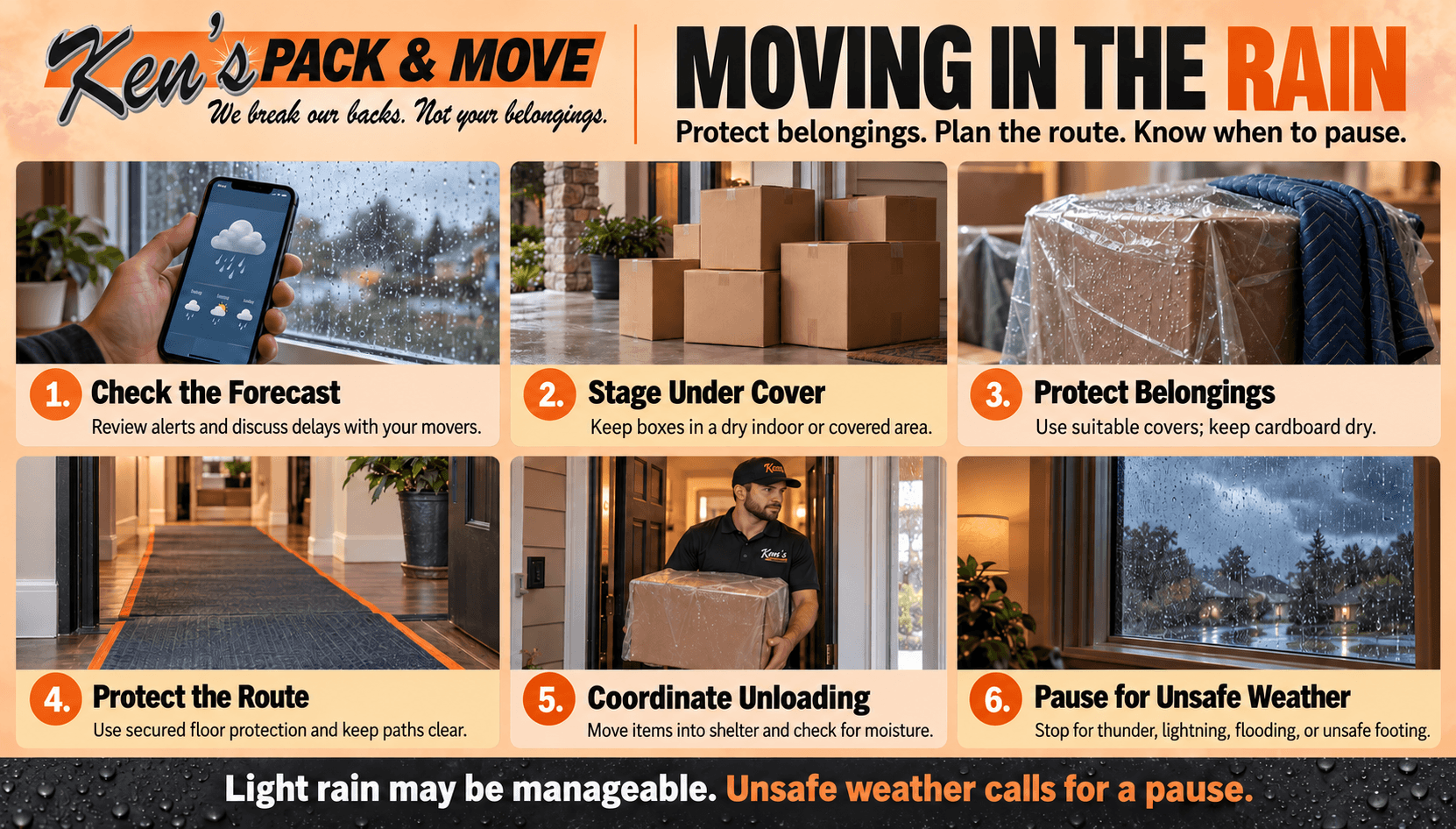
You can often move in ordinary rain when access remains safe, belongings have appropriate protection, and your mover agrees that loading can proceed. Keep boxes indoors until needed, use a short approved loading route, and manage water at entrances. Pause outdoor work for thunder, flooding, dangerous wind, or unsafe footing. Confirm schedule changes and charges with the mover rather than assuming weather cancellation is free.
How Is Ordinary Rain Different From Dangerous Moving Weather?
Ordinary rain becomes a moving problem when it affects footing, visibility, access, or the ability to keep a load controlled. A light shower over a level, sheltered entrance presents a different situation from water flowing across steep outdoor steps. Evaluate the actual route instead of using rainfall alone to decide whether the move is practical.
The National Weather Service lightning guidance advises moving into a safe building or suitable enclosed vehicle when thunder threatens and waiting at least 30 minutes after the last thunder before returning outdoors. An open porch or temporary canopy is not adequate lightning shelter. That safety pause takes precedence over protecting a sofa or finishing the final truckload.
For flooding, follow the National Weather Service flood safety guidance. Do not walk or drive through floodwater or bypass a closed road. A moving truck’s size does not make an uncertain crossing acceptable. Discuss a safe alternate route, a delay, or a revised destination access plan with the driver. The household should also review its own travel route before leaving.
What Should You Confirm With Your Movers Before a Rainy Move?
Confirm the move’s weather plan as soon as the forecast suggests a problem. Ask who makes the decision to pause, how the crew will contact you, and what happens if unloading cannot start at the agreed time. Keep the response with your booking information so everyone works from the same understanding.
Give the mover specific access details: outdoor stair count, exposed walkway length, porch cover, slope, parking limitations, and whether the destination has a loading dock. Photos taken safely can communicate these conditions more clearly than describing the home as easy to access. Share information about both addresses because unloading may be the more difficult stage.
Ask what protective materials are included and what you should supply. Do not assume that every mover carries enough waterproof coverings for your entire household or that a moving blanket is waterproof. Clarify customer packing responsibilities and how a weather delay affects the quote. Ken’s local moving services are a relevant starting point for a Triangle move, while your written service agreement controls the actual scope.
Five Questions to Ask Before Moving Day
- Who decides when loading or unloading must pause?
- What coverings and floor protection are included?
- What should the household prepare or supply?
- How will waiting or rescheduling affect the booking?
- What happens if the destination becomes inaccessible?
How Do You Build a Dry Indoor Staging Area?
Create a staging area inside the home near the approved exit, with enough space to sort loads without blocking the route. Keep the door swing clear and leave access to stairs, bathrooms, electrical panels, and emergency exits. The goal is a controlled transfer point, not a wall of boxes at the front door.
Group ready boxes by destination room or handling need. Put moisture-sensitive items where they can wait indoors until the crew is ready to take them directly to the vehicle. Leave visibly damaged cartons out of the loading queue until the mover has assessed whether repacking is necessary. Keeping a questionable box separate prevents someone from picking it up before its condition is noticed.
The destination also needs a receiving area. Arrange a dry place for wet outer coverings and a separate area for clean cartons. If furniture arrives with a damp protective layer, ask the crew how that layer should be removed before the item enters its final room. This preparation reduces the chance of carrying outdoor water through an otherwise dry house.
Which Protection Works for Boxes, Furniture, and Electronics?
Choose protection for the material and expected exposure. A closed plastic tote can resist splashes better than an uncovered carton, but its lid may not form a watertight seal. A furniture pad cushions surfaces but can absorb water. A waterproof outer cover can help during a brief outdoor transfer when it is secured without interfering with handling.
For cartons, intact seams and sound bottoms matter as much as a rain cover. Do not rely on extra tape to restore a box whose cardboard has softened. For upholstered furniture, mattresses, and unfinished wood, discuss appropriate protection with the mover before loading begins. Avoid taping directly onto finishes, fabrics, or screens. Use protective products according to their instructions.
Keep electronics indoors until their transfer is ready and use suitable packaging. A cover does not make an electrical device safe to use after water enters it. If equipment becomes wet, stop and seek manufacturer or qualified service guidance before powering it. Keep documents, medication, small valuables, and personal essentials in your own protected bag rather than burying them in the shipment.
Rain Protection Comparison
The best preparation depends on what you are protecting. Use this comparison to discuss supplies and handling with the crew.
| Item or Location | Practical Preparation | Limitation to Remember |
|---|---|---|
| Cardboard boxes | Keep indoors, inspect bottoms, and cover during transfer. | Wet cardboard can lose strength. |
| Upholstered furniture | Ask about fitted protection and a secured outer cover. | Damp pads can hold moisture against fabric. |
| Electronics | Use suitable packaging and minimize outdoor waiting. | A cover does not undo water exposure. |
| Entry floors | Use compatible, secured protection and monitor water. | Loose sheets and curled edges create trip risks. |
| Personal essentials | Carry in a protected bag in your passenger vehicle. | Keep accessible if the truck is delayed. |
| Outdoor stairs | Review traction and lighting with the crew. | Unsafe steps may require a pause or alternate route. |
How Can You Protect Floors Without Creating a Slip Hazard?
Floor protection should stay flat, suit the floor finish, and remain secure under repeated foot traffic. Ask the crew about materials appropriate for your flooring. A loose plastic sheet may reduce moisture contact while making footing worse. An absorbent towel can also become a sliding obstacle if it shifts or bunches near the threshold.
Separate the job of protecting the finish from the job of managing water. Suitable runners or protective boards may protect surfaces, while compatible entry mats handle moisture. Follow product instructions and building rules, especially for newly installed floors. Do not place adhesive protection on a finish without checking whether the manufacturer permits it.
Assign a household adult to monitor the entry from a safe position clear of the carrying route. Replace soaked materials, remove curled edges, and tell the crew immediately if water reaches stairs or smooth flooring. Do not ask movers to remove protective footwear while carrying heavy items. Instead, agree on a workable protection method before loading and keep children and pets out of the transfer zone.
Where Should the Truck Park During Rain?
The truck should use the closest safe and permitted loading position that the driver and property rules allow. A shorter path can reduce rain exposure, but it does not justify blocking traffic, using unstable ground, or placing a vehicle beneath a hazard. Confirm parking and access before the crew arrives rather than improvising when rain starts.
Describe narrow driveways, trees, overhead obstructions, drainage areas, and shared parking. If your Raleigh or Cary building reserves a loading space, ask whether the reservation can be extended during a weather delay. A loading dock or covered garage may have vehicle size restrictions. The driver needs those details to judge whether the vehicle can use the space.
Do not move cones, override barriers, or direct the truck onto a lawn to get closer to the door. Saturated ground may not support the vehicle, and property damage can create another delay. If the safe parking location is farther away than expected, discuss how that changes the carrying route and time estimate. Give the crew room to evaluate the route before boxes leave the staging area.
Should You Use a Canopy or an Umbrella?
A canopy may help with rain exposure only when it can be installed safely, permitted by the property, and kept clear of the moving route. It should not become something a person carrying furniture must duck under or push aside. Wind, anchoring limits, and narrow entrances can make a temporary shelter unsuitable.
Ask before placing a canopy beside the truck or loading ramp. The crew needs clearance for tall furniture, dollies, and turns. Never attach a makeshift cover to utility equipment, trees, or vehicles without permission and an appropriate method. Do not treat a temporary rain shelter as protection during lightning or severe weather.
Holding an umbrella while carrying a heavy item reduces the hands available to control that item. Household members can instead help by keeping doors available when safe, identifying wet floor areas, or moving personal essentials through a separate clear route. The mover should determine the handling method for furniture. Helpful support should reduce distraction and obstacles rather than place another person directly in the carrying path.
What Should You Do if a Box Gets Wet?
If a box gets wet, stop treating it as a normal load until its condition is assessed. Check for sagging, soft corners, loosened tape, and a bottom that no longer feels firm. Do not lift a heavy damp carton by its top flaps or stack more weight on it. Tell the crew before the box is moved again.
For a lightly damp exterior with dry contents, the practical response may be to remove the wet cover and inspect the packaging in a dry area. If the carton has weakened, repack into a sound container with suitable cushioning. Keep the box identifier and destination room consistent so the contents do not become difficult to track during the repair.
When contents are wet, separate them from dry items and document the condition before changing the packaging if doing so is safe. Photograph visible moisture and the original box label. Keep damaged packaging if the mover requests it for review. Do not assume surface drying makes books, electrical equipment, upholstered items, or finished wood fully restored. Ask the relevant manufacturer or specialist when material damage is uncertain.
How Should You Handle a Weather Delay?
Handle a weather delay by confirming the revised plan in writing and adjusting the related appointments. Record whether the crew is pausing at the origin, waiting before departure, or unable to unload at the destination. Each situation affects the household differently, especially if keys, a lease handover, or a reserved elevator are involved.
Ask about the next decision time, the expected communication channel, and applicable waiting or rescheduling charges. Avoid promising a new arrival time to a landlord before the mover confirms it. If your building has a fixed window, contact management promptly and explain that the delay concerns safe loading or travel. Request an approved alternative rather than using an unreserved elevator or entrance.
Keep your overnight bag, phone charger, documents, and pet supplies with you. If the move needs another day, determine where the household and shipment can wait safely. Any storage arrangement needs an explicit scope, availability confirmation, and cost discussion. Weather does not automatically convert a transportation booking into storage, and same-day assistance depends on actual crew availability.
What Makes a Raleigh or Cary Rain Plan Useful?
A Triangle rain plan should reflect the specific addresses, not a generic assumption about local weather. A move from a Cary townhome to a Raleigh apartment may combine exposed steps at one end with a controlled loading dock at the other. A move within the same neighborhood still needs separate access checks at loading and unloading, and current weather information for both locations.
For apartments and condominiums, communicate with management about entrance use, floor protection, parking, and weather extensions. For houses, inspect the agreed route for leaves, standing water, loose pavers, and poorly lit steps before the crew arrives. Do not climb onto roofs or attempt drainage repairs during a storm. Report access problems and discuss a safer route instead.
If the move crosses the Triangle, allow the driver to select a safe route based on actual conditions. Avoid setting a rigid arrival promise around an assumed travel time. Ken’s moving tips cover broader planning topics, while this rain plan addresses the exposure and safety decisions that can change during the move itself.
What Should You Inspect After Unloading?
Inspect for moisture while belongings are still easy to identify and protective layers can be checked. Look at carton bottoms, furniture covers, the entry area, and items that spent time outdoors. Tell the crew about concerns before it leaves when possible. A specific report is more useful than assuming every item is dry because the rain has stopped.
Move cartons into their destination rooms without stacking damp containers beneath dry ones. Open boxes that need immediate moisture assessment in a clean, dry area. Remove wet outer protection when appropriate and avoid leaving damp materials against furniture. If an item needs specialist inspection, keep it separated and do not attempt a repair that could obscure its condition.
Keep photographs, labels, and written communications together if you discover damage. Ask the mover for its reporting process and follow the applicable agreement. This guide cannot determine whether a particular loss is covered or who is responsible. The useful first step is to record what you observed, when you observed it, and which item or container was affected.
If another adult receives the shipment, give that person the same weather notes and item priorities before arrival. Identify cartons that needed repacking and furniture that traveled beneath a temporary outer cover. Ask the receiver to report observations rather than simply sending a message that unloading is finished. A consistent handoff preserves the information collected at the origin and makes it easier to distinguish a concern noticed during loading from one found after delivery.
A Practical Rainy Moving-Day Sequence
The Night Before
Confirm the forecast, access plan, contact person, and supplies. Put personal essentials in a protected bag and identify a dry staging area at both properties. Keep spare sound boxes available if you are responsible for customer packing. A clear plan reduces the number of decisions that need to happen with a door open and rain entering the house.
Before and During Loading
Review the route with the crew and explain changes since booking. Inspect steps and entry protection from a safe position. Keep moisture-sensitive cartons indoors until the crew is ready for them. During loading, stay reachable and monitor the household’s responsibilities without stepping into the carrying route or directing unsafe shortcuts.
At the Destination
Prepare the receiving area before unloading starts. Confirm room names, manage wet outer covers, and inspect concerns promptly. After the crew finishes, check entrances, flooring, and damp packaging again. These steps are planning guidance rather than a guarantee against damage. The mover’s safety assessment and official weather instructions remain the basis for decisions during the day.
Plan Your Raleigh or Cary Move With Ken’s Pack & Move
Ken’s Pack & Move provides moving and packing services in the Triangle. To discuss a rainy-day contingency, share both addresses, your proposed date, stair and parking details, and building access restrictions. Ask what protection is included and how schedule changes are handled for your booking.
Confirm the final service scope and weather plan before moving day so your household and the crew can prepare for the same conditions.
Frequently Asked Questions About Moving in the Rain
Will movers cancel because rain is forecast?
Not necessarily. A forecast alone does not determine whether access and handling will be safe at your addresses. Ask the mover about its weather policy, who makes the decision, and how changes are communicated. Ordinary rain may be manageable, while lightning, flooded access, dangerous wind, or slippery stairs may require a pause or a different date.
Are moving blankets waterproof?
Ordinary moving blankets generally provide cushioning and surface protection rather than a reliable waterproof barrier. They can become damp and hold moisture against furniture. Ask your mover what outer protection is appropriate for your items and exposure. Keep protected furniture indoors until loading is ready, and check whether wet covering needs removal after arrival.
Should I replace every box that gets rained on?
Assess each box rather than using a single rule. A little exterior moisture is different from a softened bottom, failed seam, or wet contents. Show questionable cartons to the crew before lifting them. Repack weakened boxes into sound containers, preserve identifying labels, and separate wet contents for inspection instead of stacking them with dry belongings.
Can I reserve the building elevator for longer if it rains?
You can request an extension, but management must approve it. Building rules, other reservations, and staffing may limit the available window. Contact management as soon as a delay becomes likely and ask which entrance and time can be used. Tell your mover the approved change so the crew can adjust unloading without assuming extra access.
Is a covered porch safe during a thunderstorm?
A covered porch or open-sided canopy should not be treated as adequate lightning shelter. Follow National Weather Service guidance and move into a safe building or suitable enclosed vehicle when thunder threatens. Wait at least 30 minutes after the last thunder before returning outdoors. Resume the move only when weather and the carrying route allow safe work.
What should stay in my car during a rainy move?
Keep identification, moving documents, keys, medication, small valuables, chargers, and an overnight bag in a protected, accessible place with you. Include household and pet essentials if unloading might be delayed. Do not assume the shipment will be immediately accessible after loading. Secure belongings in the passenger vehicle without obstructing the driver or exits.
Does rain automatically increase the moving price?
Rain does not establish a universal charge. The effect depends on your agreement, billing method, work performed, waiting time, and rescheduling terms. Ask the mover how a pause or longer carrying route affects your booking before loading begins. Record the explanation and approved changes so the final invoice can be compared with the agreed scope.
What if my new home has a wet or unsafe entrance?
Tell the mover before unloading and discuss an approved alternate entrance, a safety pause, or a revised schedule. Do not ask the crew to carry heavy furniture across standing water or an unstable path. Check with property management when shared entrances are involved, and arrange a safe place for your household while the access problem is resolved.